There are product launches, and then there are moments that genuinely shift the direction of an entire market. The Bajaj Chetak 2026 looks like the latter. Unveiled today, this electric scooter arrives with a 170 km claimed range, a connected feature set that punches well above its segment, and a starting price of ₹25,550 — a number that will stop a lot of buyers mid-scroll and make them look twice.
The Chetak nameplate carries decades of emotional weight in India. Bajaj retired the original in 2006, and its return as an electric scooter in 2019 was already a statement. But the 2026 iteration feels different in scale and ambition. This is not a niche offering for early EV adopters willing to pay a premium for novelty. At this price point, Bajaj is going after the mainstream — the daily commuter, the first-time EV buyer, the family that has been waiting for electric mobility to make financial sense before making the switch.
Design: Where Heritage Earns Its Keep
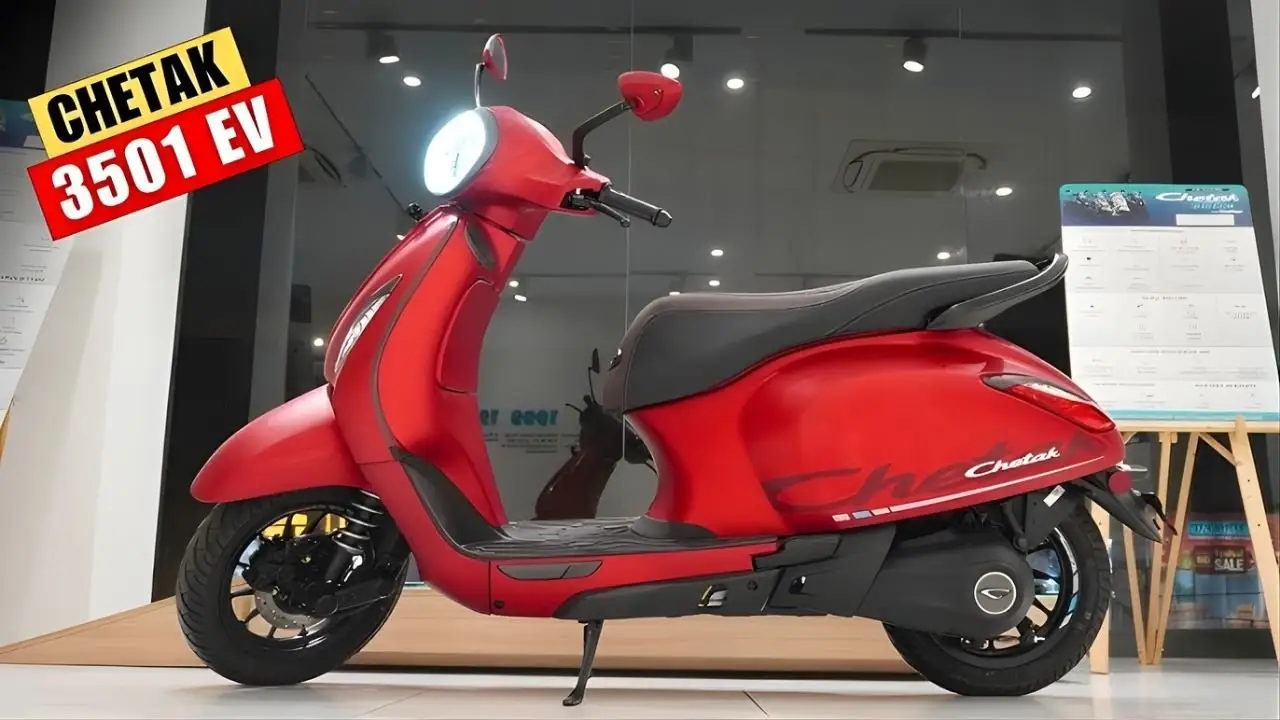
Bajaj has walked a careful line with the Chetak’s visual identity since its electric revival, and the 2026 model continues that approach with more confidence. The scooter retains its rounded, retro-modern silhouette — smooth body panels, a clean front apron, sweeping curves that feel deliberate rather than dated. Nothing about it screams budget product, and that matters enormously at this price.
The metal body construction contributes to the premium tactile feel that buyers notice the moment they stand next to one on a showroom floor. Paint quality is noticeably strong for the segment, and the overall fit and finish reflects Bajaj’s manufacturing maturity rather than the rough edges that sometimes accompany aggressively priced EV entries from newer players.
In a segment where many competitors lean hard into futuristic, angular styling, the Chetak 2026’s measured elegance is a genuine differentiator. It appeals to buyers who want something that looks considered, not conspicuous.
The Range Question: 170 km Changes the Conversation
Addressing the Single Biggest EV Objection
Range anxiety has been the single most consistent barrier to electric scooter adoption in India, and 170 km on a single charge directly dismantles that argument for the vast majority of urban riders. Average daily urban commute distances in Indian cities sit well below 50 km for most riders — meaning the Chetak 2026 could realistically operate on a charge-every-three-or-four-days rhythm for a significant portion of its buyers.
That shift in charging cadence is psychologically important. It moves the Chetak closer to the petrol scooter ownership experience that Indian buyers understand instinctively, reducing the behavioural adjustment required to go electric.
The battery management system pairs with an efficient electric motor to deliver that range without the kind of performance compromise that plagued earlier budget EVs. Acceleration is linear and confident, throttle response at intersections is quick enough to keep pace with urban traffic, and highway stretches within city limits are handled without the motor feeling strained.
Real-World Expectations
Claimed range figures always carry an asterisk. Rider weight, road surface, speed, and climate conditions will all drag the real-world number below 170 km. A realistic expectation of 120–140 km under typical Indian urban conditions would still represent one of the stronger real-world ranges available at anywhere near this price point, and Bajaj’s battery management calibration has historically been more conservative than some competitors — meaning the gap between claimed and actual may be narrower than usual.
Technology: Smart Features Without the Smart Price
The instrument cluster on the Chetak 2026 is fully digital, offering clear readout of speed, range, charge status, and ride data. Beyond the display, the scooter connects to a dedicated mobile application that allows riders to monitor vehicle statistics, receive fault alerts, and review trip data remotely.
This level of connectivity was, until recently, the exclusive territory of scooters priced two or three times higher. Bajaj’s decision to bring it into a sub-₹30,000 product reflects both falling component costs and a strategic understanding that younger Indian buyers now treat smartphone integration as a baseline expectation rather than a premium feature.
Comfort, Safety, and Build Quality
The riding ergonomics on the Chetak 2026 prioritize accessibility over sportiness. A wide, well-cushioned seat accommodates rider and pillion with genuine comfort, the footboard offers enough space to shift position on longer rides, and the handlebar geometry keeps the riding posture relaxed rather than hunched.
Suspension calibration handles the varied surface quality of Indian urban roads with composure — the low center of gravity inherent to electric scooter packaging, with the battery mass sitting low in the frame, contributes to stable handling through corners and during sudden directional changes.
The braking system delivers confident stopping power, and the metal frame construction provides a structural solidity that buyers can feel in everyday use. For a product at this price, the build quality is a serious competitive asset.
Charging and Running Costs: The Ownership Argument
Home charging compatibility means most Chetak 2026 owners will simply plug in overnight and start each day with a full charge — no detours to fuel stations, no fluctuating petrol prices to track. The running cost per kilometre for an electric scooter charged at home sits dramatically below that of any equivalent petrol scooter, and the Chetak’s minimal mechanical complexity keeps servicing costs low over the ownership period.
Over three to four years of typical usage, the total cost of ownership calculation tends to favour electric strongly — and at ₹25,550 entry pricing, the initial acquisition cost barrier that once complicated that calculation has effectively been removed.
Market Impact: What This Launch Means
A Pricing Moment for the Industry
The ₹25,550 price tag deserves analysis beyond the headline. India’s electric two-wheeler market has grown substantially, but penetration of the mass commuter segment — where volumes truly lie — has remained limited by price sensitivity. Competitors like Ola Electric, Ather Energy, and TVS iQube have built strong products, but most sit at price points that require buyers to make a conscious financial stretch.
Bajaj Chetak 2026 at this price changes the competitive frame entirely. It forces rivals to either match the value proposition or clearly articulate why their higher-priced products justify the premium. Neither is a comfortable position, and the market response over the next two quarters will be worth watching closely.
Who Buys This Scooter
The Chetak 2026 targets a broad demographic, but the most impactful buyer is the petrol scooter owner currently riding a Honda Activa or TVS Jupiter who has been watching the EV space with interest but waiting for the financial case to become undeniable. At ₹25,550, with 170 km range, home charging, and a brand name they trust, that case has now been made.
First-time two-wheeler buyers, young urban professionals, and households looking for a second vehicle for shorter daily commutes round out the target audience. The Chetak’s design appeals across age groups in a way that more aggressively styled EVs do not.
The Bigger Picture
The Bajaj Chetak 2026 is the kind of product that arrives at exactly the right moment and makes the market look different on the other side of it. Bajaj has paired genuine range capability, connected technology, and trusted build quality with a price that removes the last reasonable objection most buyers had to going electric.
India’s EV transition has been building momentum for several years. The Chetak 2026 may well be the product that accelerates it from a trend into a mainstream reality. The next few months of sales data will tell the full story — but the foundations Bajaj has laid with this launch are exceptionally strong.