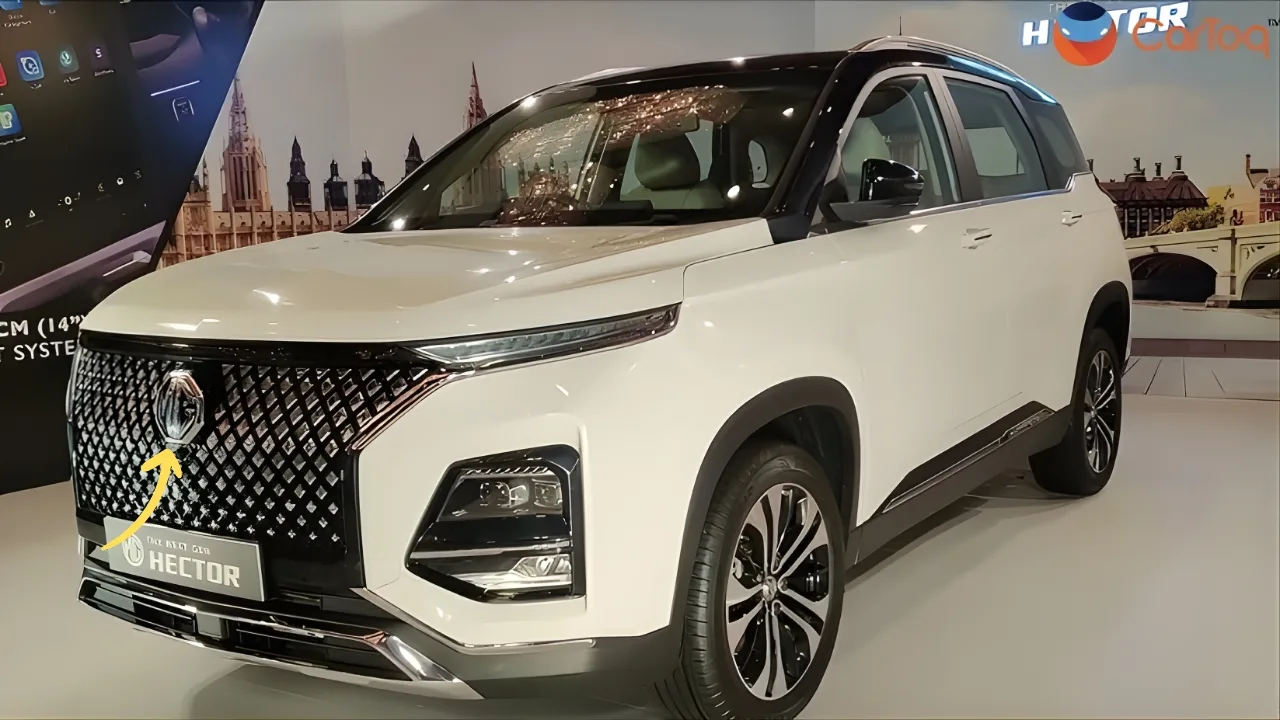
When JSW MG Motor India cuts the price of one of its flagship SUVs by over ₹2 lakh while simultaneously upgrading its design, technology, and safety specification, the mid-size SUV segment takes notice. The MG Hector 2026 has been officially unveiled, and it arrives as something considerably more significant than a routine facelift. This is a product repositioning — a deliberate, aggressive move by MG to reclaim territory it has been conceding to the Tata Harrier and Mahindra XUV700 in a segment that has grown dramatically more competitive since the original Hector rewrote expectations with its internet-connected feature set back in 2019.
The numbers frame the statement clearly. The 2026 Hector starts at ₹11.99 lakh — a reduction of up to ₹2.1 lakh from the outgoing model’s pricing. For that money, buyers receive a refreshed exterior with a new grille design, a more connected and feature-loaded interior, Level 2 ADAS safety technology on higher variants, and the same 1.5-litre turbo-petrol and 2.0-litre diesel powertrain options that have given the Hector its driving character. The pricing move alone forces competitor buyers to recalculate. The full package makes the MG Hector 2026 one of the more difficult SUV purchase decisions to walk away from in this price bracket.
Design: Sharp, Distinctive, and Deliberately Attention-Seeking
The Aura-Hex Grille Leads a Thorough Exterior Refresh
The front end of the 2026 MG Hector centres on the new Aura-Hex grille design — a hexagonal pattern treatment that creates a wider, more assertive face while maintaining the visual distinction that the Hector has always used to separate itself from the horizontal-bar uniformity that dominates the segment. Flanking LED headlamps with a slim, graphic signature complement the grille effectively, and the connected rear tail lamp strip that spans the full width of the tailgate creates the kind of instantly recognizable rear identity that buyers notice in traffic behind the Hector.
Updated front and rear bumpers, enhanced skid plate detailing, and new 18-inch Aura Bolt alloy wheel designs contribute to a stance that communicates confidence without resorting to the exaggerated aggression that can make some mid-size SUV facelifts look overwrought. Floating turn indicators add a detail-level distinction that rewards close inspection. New colour options — including Celadon Blue and Pearl White — freshen the palette and give the 2026 Hector additional showroom presence.
At 4,699mm in length with a 2,750mm wheelbase, the Hector’s dimensions position it at the larger end of the mid-size SUV category — a practical advantage for buyers prioritising interior space and road presence over parking convenience.
Interior: Technology Density Remains the Hector’s Defining Argument
A Cabin That Connects as Well as Anything in the Segment
The MG Hector built its original market identity on interior technology — the large infotainment screen, the voice command system, and the connected car features that competitors took years to match. The 2026 model extends that lead rather than resting on it. The dashboard features a 7-inch digital instrument display with customisable themes, wireless Android Auto and Apple CarPlay, and a voice command system that now handles over 100 functions — an expansion of the conversational scope that reduces the need to interact with the touchscreen while driving.
The MG App Store powered by Jio integration brings a genuinely differentiated connected ecosystem to the Hector that operates more like a smartphone platform than a conventional infotainment system. For buyers who treat their vehicles as extensions of their digital life rather than separate objects, this integration is a meaningful practical advantage over competitors offering more conventional connectivity systems.
Comfort features across the variant range include ventilated front seats, a six-way power-adjustable driver’s seat, leatherette upholstery, and eight-colour ambient lighting — a combination that creates a premium cabin environment at a starting price that makes the feature list look implausibly generous until you experience it in person.
Seven-Seater Flexibility for Family Buyers
The Hector Plus seven-seater variant adds captain chairs in the second row, a sliding second-row adjustment for third-row access management, and a 587-litre boot capacity in a configuration that serves as a genuine full-family vehicle rather than a technical seven-seater where the third-row experience is an afterthought. The dual-tone Urban Tan interior theme for the seven-seater creates a visually warmer, more premium cabin character than the Ice Grey specification of the five-seater — a subtle but effective product differentiation across the two body configurations.
Powertrain: Proven Engines, Refined for 2026
1.5-Litre Turbo-Petrol and 2.0-Litre Diesel — Both Credible Choices
The 2026 MG Hector continues with the powertrain lineup that has served it well across its Indian market life. The 1.5-litre turbocharged petrol engine producing 143PS and 250Nm of torque pairs with a six-speed manual or CVT automatic — a combination that handles urban commuting and highway cruising with a relaxed competence rather than sporting aggression, which suits the Hector’s character and buyer profile well.
The 2.0-litre diesel option at 170PS and 350Nm remains available with a manual gearbox, delivering the strong low-end pull that highway and semi-urban driving rewards, with real-world fuel efficiency in the 13–14 kmpl range for mixed use. The diesel retains its relevance for buyers covering higher annual distances where the running cost advantage over petrol accumulates meaningfully across an ownership period.
Drive mode selection across Eco, Normal, and Sport provides the Hector’s power delivery some adaptability to different driving conditions without fundamentally altering the vehicle’s character across modes. The 60-litre fuel tank provides a comfortable real-world range on both powertrains, reducing the frequency of fuel stops on longer highway journeys.
The suspension refinement applied to the 2026 model specifically targets the Hector’s behaviour on the broken, unpredictable surfaces that characterise Indian semi-urban roads — improvements in this area tend to accumulate into daily ownership satisfaction in ways that powertrain specifications alone do not capture.
Safety: From Adequate to Genuinely Strong
Level 2 ADAS Arrives in the Upper Hector Variants
The 2026 MG Hector’s safety specification represents its most significant improvement over the previous generation. Six airbags, electronic stability programme, hill-hold control, and traction control come as standard across the range — establishing a solid passive and basic active safety baseline. The 360-degree HD camera system provides full-perimeter visibility assistance that is practically useful daily for a vehicle of the Hector’s dimensions in congested urban environments.
Higher-specification variants add Level 2 ADAS — adaptive cruise control, lane-keeping assistance, and autonomous emergency braking — that makes extended highway driving meaningfully less fatiguing and more secure. These features, appearing in a vehicle starting below ₹20 lakh, reflect how rapidly active safety technology has democratised in Indian mid-size SUV pricing over the past two years.
Connected safety features including e-call roadside assistance and OTA software updates ensure the Hector’s safety systems remain current through the ownership period. A PM2.5 air purifier addresses urban air quality concerns that have become increasingly relevant for buyers in major Indian cities — a practical feature that operates without active intervention and contributes to long-term cabin air quality throughout daily use.
Pricing Strategy: The Most Interesting Number in This Launch
₹11.99 Lakh and What It Changes
The decision to launch the 2026 MG Hector with a starting price of ₹11.99 lakh — reduced by up to ₹2.1 lakh from the outgoing model — deserves analysis as a competitive strategy rather than just a headline figure. The Tata Harrier, Mahindra XUV700, and Hyundai Alcazar all compete in overlapping price territory, and the Hector has faced perception challenges around value positioning relative to those alternatives in recent sales periods.
By resetting the price anchor at ₹11.99 lakh while delivering improved feature content and a refreshed exterior, JSW MG Motor effectively forces buyers comparing the Hector against competitors to rebuild their consideration framework from a more favourable starting position. The ₹2.1 lakh reduction on equivalent variants is not a distress signal — it is a market share targeting decision that reflects confidence in the 2026 product’s ability to win at a more competitive price point.
The top Savvy Pro CVT five-seater at ₹18.99 lakh and the Hector Plus seven-seater beginning at ₹17.29 lakh create a full variant spread that captures buyers across a wide budget range within the mid-size SUV segment’s natural purchasing space.
After-Sales and Ownership Confidence
MG’s expanding service network and the involvement of JSW Group’s infrastructure and resources in the Indian market provide the ownership support foundation that converts purchase interest into actual sales. For buyers who hesitated on the Hector in previous generations due to concerns about after-sales access — a legitimate consideration for any brand still building its service network footprint in India — the 2026 model’s launch context offers meaningfully greater reassurance than its predecessors could.
The Competitive Reality
The MG Hector 2026 Unveiled at this price and specification level creates genuine pressure for its primary competitors. The Tata Harrier’s strengths — safety credibility, interior quality, brand trust — remain real, but the Hector’s technology density and price reduction narrow the gaps that have favoured the Harrier in recent comparative evaluations. The Mahindra XUV700’s value proposition at its respective price points remains exceptional, but the Hector’s connected car ecosystem and JIO integration offer a different kind of technology story that resonates with a specific buyer profile.
The Hector has always been an SUV for buyers who want their vehicle to feel like a technology product as much as a transport solution. The 2026 model makes that argument more convincingly, at a lower price point, than any previous iteration — and in a market that has proven repeatedly receptive to that specific value proposition.
What Comes Next
The MG Hector 2026 arrives at a moment when the mid-size SUV segment in India is both its most competitive and its most feature-rich. JSW MG Motor’s decision to respond with an aggressive price reduction alongside a genuine product upgrade signals intent rather than desperation — this is a brand that understands where it needs to position the Hector to win consideration sets it has been losing, and has made the necessary moves to reclaim them.
For buyers currently evaluating options in the ₹12–20 lakh SUV space, the 2026 Hector demands a test drive before any decision is finalised. At this pricing, with this feature content, and with the connectivity ecosystem that still sets it apart from the competition, walking past the showroom without stopping would be a missed opportunity that the numbers do not justify.
The Hector’s comeback narrative is well constructed. Whether it translates into sustained volume recovery will depend on execution at the dealership level and real-world product reliability — but the foundation JSW MG Motor has laid with this unveiling is the strongest the Hector has had since its debut year.