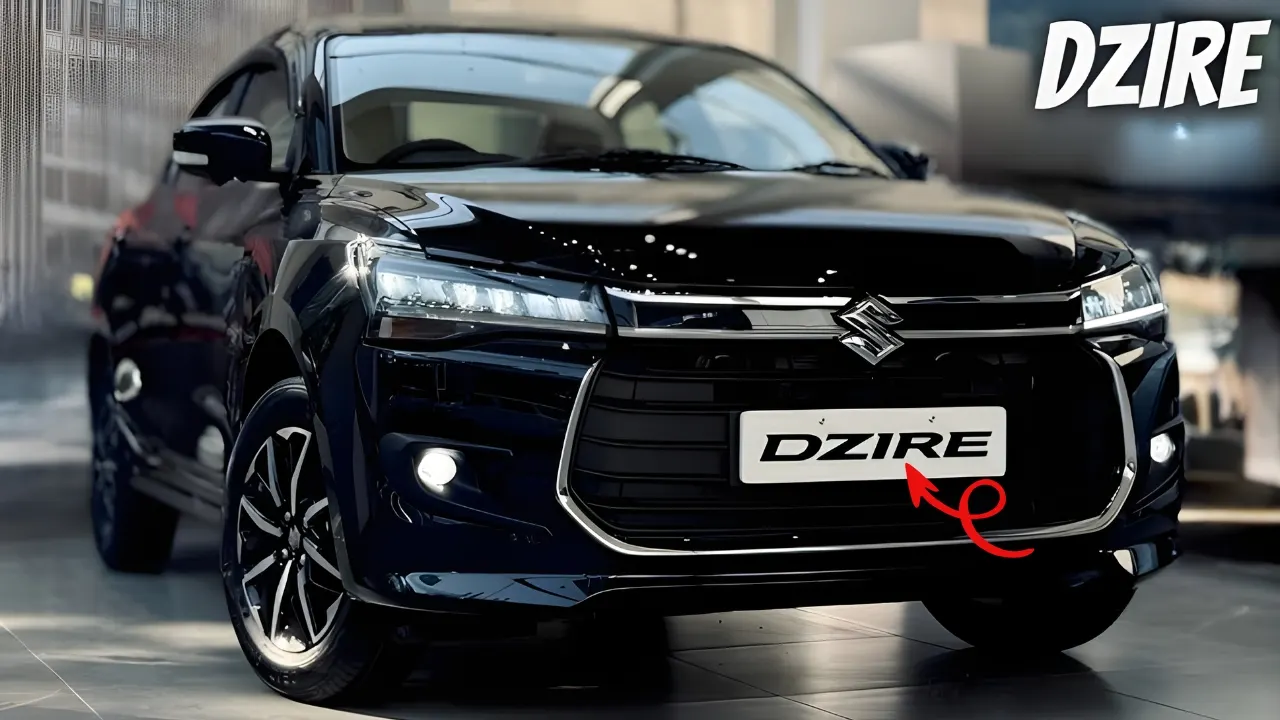
Thirty lakh units sold. That number alone tells you what the Maruti Dzire means to Indian car buyers — not as a statistic, but as a sustained, multi-generational expression of what this market values in a practical family sedan. And yet, despite that accumulated commercial success, Maruti has not treated the 2026 relaunch as an opportunity to coast. The Maruti Dzire 2026 arrives with a completely redesigned exterior, a new three-cylinder petrol engine architecture, a five-star safety rating from both Global NCAP and Bharat NCAP, and a starting price of ₹6.26 lakh that makes the value case almost unreasonably strong.
The launch timing carries strategic significance beyond the product itself. India’s passenger car market has tilted dramatically toward SUVs over the past five years, and compact sedans have felt the pressure of that shift in their sales volumes. The Hyundai Aura and Honda Amaze have maintained presence, but the segment has lost the cultural momentum it once commanded. The 2026 Dzire is Maruti’s argument that the compact sedan’s relevance is not diminishing — it is simply waiting for the right product to remind buyers why it made sense in the first place. Boot space, highway stability, fuel efficiency, and total cost of ownership are the dimensions where the Dzire wins that argument, and the 2026 model makes the case more forcefully than any previous generation.
Design: Finally, a Dzire That Looks as Good as It Drives
A Generational Leap in Visual Confidence
The outgoing Dzire had its defenders, but visual excitement was rarely among the reasons buyers chose it. The 2026 model changes that assessment entirely. The front fascia introduces a bold horizontal grille design flanked by slim LED headlamps that give the car a horizontal width emphasis — a design technique that makes the proportions read as wider and more planted than the dimensions alone would suggest.
The side profile is the most striking departure from Dzire tradition. A gentle coupe-like roofline arc gives the 2026 model a dynamic character that compact sedans in India have historically been reluctant to commit to, and 15-inch alloy wheels on higher variants contribute to a stance that looks genuinely contemporary rather than functionally apologetic. The 3,995mm length and 2,450mm wheelbase sit at the maximum of the sub-4 metre sedan category — dimensions that Maruti’s engineers have used to maximise interior space within the tax-advantaged body length constraint.
New colour options including Alluring Blue and Magma Grey give the Dzire a palette that reads as aspirational rather than conservative — a shift that matters considerably for the younger buyer segment that Maruti needs to attract alongside its loyal existing base.
Engine and Efficiency: New Architecture, Proven Priorities
The Z12E Three-Cylinder and What It Changes
The 2026 Maruti Dzire’s powertrain represents a clean-sheet approach to the engine architecture that has powered previous generations. The new 1.2-litre Z12E three-cylinder petrol unit produces 80bhp and 111.7Nm of torque — figures that position it within the expected range for this displacement and market segment, but the engineering emphasis has been placed on low-speed urban tractability, NVH suppression, and the efficiency that the ARAI-certified numbers reflect.
The certified mileage range of 24.79 to 25.71 kmpl depending on transmission choice — manual five-speed or AMT automatic — places the Dzire 2026 at the efficiency leading edge of the compact sedan segment. For the buyer covering 40–50 km daily in mixed urban conditions, real-world returns of 18–22 kmpl represent a fuel expenditure that compounds into a meaningful annual saving relative to competitors with less optimised powertrains or larger displacement engines.
The three-cylinder configuration introduces a character shift from the four-cylinder units in previous Dzire generations. Modern three-cylinder engines with good NVH engineering can match the smoothness refinement of equivalent four-cylinder units at typical urban speeds, and Maruti’s application of that engineering discipline appears to have produced a powertrain whose character suits the Dzire’s intended use profile well.
CNG: The Running Cost Argument Taken Further
The CNG variant’s 33.73 km/kg efficiency figure deserves attention from buyers who prioritise running costs above all other considerations. The trade-off — a power reduction to 69bhp and reduced boot space due to CNG tank packaging — is real and should factor into the purchase decision honestly. But for a buyer covering high monthly distances primarily in urban environments where CNG station access is reliable, the running cost difference between the CNG Dzire and a comparable petrol sedan accumulates into a very significant annual saving that justifies the CNG-specific compromises for the right buyer profile.
The CNG variant starts at ₹8.03 lakh — a premium over the petrol base that the fuel cost arithmetic typically recovers within 18–24 months at moderate to high annual mileage.
Interior and Technology: Premium Features Where Buyers Look First
A Cabin That Overdelivers at This Price
Step into a top-specification ZXi+ Dzire 2026 and the interior quality makes it difficult to believe the starting price of the range begins at ₹6.26 lakh. The beige cabin theme creates a sense of space and airiness that darker interiors of competitors suppress. Front seat support is notably good for a compact sedan — the kind of detail that reveals itself on longer drives rather than short test routes.
Rear passenger accommodation for three adults works practically in real-world Indian family use, with the caveat that taller occupants may find headroom somewhat limited by the coupe-roofline compromise — a trade-off that buyers with tall regular passengers should assess in person before committing to the design’s aesthetic benefits.
The 382-litre boot capacity is the Dzire’s structural advantage over any comparable SUV option in this price bracket, and it remains one of the most practically useful attributes a sub-₹10 lakh car can offer for the family buyer who travels with luggage.
Technology Content That Raises Segment Standards
Higher Dzire variants deliver technology features that have no business appearing in a ₹6.26 lakh starting-price sedan — yet here they are. The 9-inch touchscreen with wireless Android Auto and Apple CarPlay provides the connectivity baseline that every modern buyer expects. The heads-up display — projecting speed and navigation information onto the windscreen within the driver’s natural line of sight — remains a feature associated with premium segment vehicles and represents a genuine quality-of-driving-experience improvement that Maruti has brought into sub-₹10 lakh territory.
The sunroof on higher variants addresses the aspirational feature that urban Indian buyers have consistently identified as a premium desire regardless of vehicle size or price. Suzuki’s connected car application, automatic climate control, and a six-speaker audio system complete a feature environment that makes the Dzire’s cabin feel premium rather than merely adequate.
Safety: Five Stars, Standard Six Airbags — No Compromises
NCAP Credibility Across the Full Variant Range
The 2026 Maruti Dzire’s five-star rating in both Global NCAP and Bharat NCAP crash testing is perhaps the single most commercially significant specification in its entire feature list. Maruti’s safety reputation has been a vulnerability in competitive comparisons over the past decade — earlier generation products from the brand received crash test results that conservative buyers found difficult to defend. The five-star outcome for the 2026 Dzire across both testing protocols, built on the Heartect high-tensile steel platform, closes that vulnerability completely.
Six airbags across all variants — not reserved for upper trims — represents a commitment to occupant protection that buyers should recognise as a departure from the previous practice of loading safety hardware onto expensive variants while base buyers received less coverage. Combined with ESP, hill-hold assist, tyre pressure monitoring, ABS with EBD, traction control, and a 360-degree camera system, the Dzire 2026 arrives with a safety specification that matches or exceeds competitors at higher price points.
For first-time car buyers and families prioritising occupant protection as a non-negotiable purchase criterion — an increasingly significant and informed buyer cohort following several years of expanded NCAP awareness in India — the Dzire 2026’s safety credentials represent a decisive advantage over alternatives that have not achieved equivalent crash test outcomes.
Pricing and Ownership Economics: The Complete Value Equation
From ₹6.26 Lakh to ₹9.31 Lakh — A Variant for Every Budget
The Maruti Dzire 2026’s variant structure — from ₹6.26 lakh base petrol manual to ₹9.31 lakh top ZXi+ AMT — creates a price range that addresses genuinely different buyer budgets without requiring significant feature sacrifice at any point in the range. The mid-tier ZXi variants represent the strongest value concentration for most buyers, delivering the technology features that define the 2026 model’s advancement over its predecessor at a price point that remains accessible.
Recent GST adjustments have reduced prices by up to ₹87,000 on certain variants — a reduction that, combined with February launch offers, makes the effective cost of entry considerably lower than the ex-showroom starting price alone suggests. Buyers with flexible timing should verify current offer structures before finalising purchase decisions.
The Total Ownership Case Against SUV Alternatives
The Dzire’s strongest competitive argument is not against the Hyundai Aura or Honda Amaze — it is against the compact SUV buyer who is considering stretching budget or accepting higher running costs for an SUV body style that the Dzire’s practical credentials, five-star safety, and total cost of ownership advantage can genuinely challenge.
Maruti’s service network density — unmatched across India’s geographic range — and the brand’s established spare parts affordability and accessibility reduce the cost and friction of servicing across the ownership period in ways that competitors with smaller networks cannot replicate. For buyers in tier-2 cities, smaller towns, and rural areas where service access genuinely influences purchase decisions, Maruti’s network remains a decisive competitive advantage that no specification comparison fully captures.
The Segment and What Comes Next
The compact sedan segment in India has been asking for a product that could remind buyers of the category’s genuine strengths without asking them to accept compromises in safety, technology, or design that made the SUV comparison feel one-sided. The Maruti Dzire 2026 Launched with five-star safety, 25 kmpl efficiency, sunroof, heads-up display, and six standard airbags at ₹6.26 lakh makes that argument as strongly as any compact sedan has in recent Indian automotive history.
Whether the broader market trend toward SUV body styles can be meaningfully slowed by a product this comprehensively improved is a question that the next 12 months of sales data will begin to answer. What is certain is that Maruti has given the Dzire every tool available to make the case — and in a market as value-conscious and practically minded as India’s, a product that delivers this much for this little has always found its audience.
The Dzire was never going anywhere. The 2026 model is simply making that fact impossible to overlook.