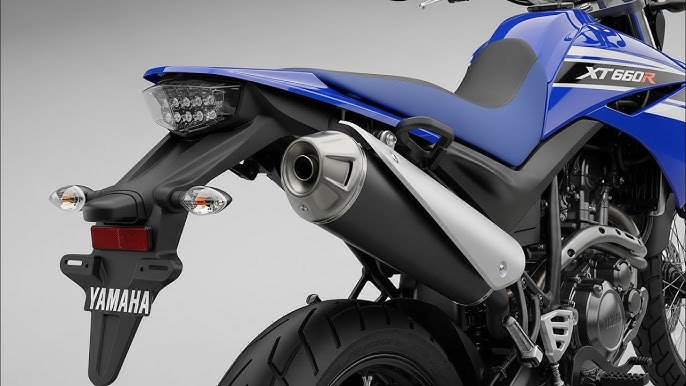
There is a specific kind of rider that the dual-sport motorcycle was invented for — someone who refuses to accept that choosing a bike means choosing between the city and the open trail. The commute on Monday morning and the mountain road on Saturday cannot be two separate motorcycles for this rider, because the budget and the parking space simply do not permit it. The Yamaha XT660R has served that rider for years with a combination of torquey single-cylinder performance, long-travel suspension capability, and the kind of mechanical durability that adventure riding demands. The Yamaha XT660R 2026 Launched now updates that formula with refined engine calibration, practical technology additions, and comfort improvements that make the motorcycle more capable as a daily tool without softening its off-road identity.
The timing of this launch lands well in a segment that has grown considerably more competitive. Royal Enfield, KTM, and BMW’s entry-level adventure offerings have all expanded the dual-sport conversation with new products and updated specifications in recent model years, raising buyer expectations around technology, refinement, and feature content. Yamaha’s response with the 2026 XT660R is characteristically measured — improvements applied where they genuinely matter for the rider’s experience, without the complexity escalation that can make a practically designed motorcycle feel less accessible and more demanding to own and maintain over time.
Design: Purpose Built, Properly Resolved
A Dual-Sport Identity That Means What It Says
The Yamaha XT660R 2026 wears its design priorities without apology. The tall, upright stance that defines the dual-sport silhouette is not a styling choice but a functional position — placing the rider higher for better terrain visibility, providing the long-travel suspension the geometry to do its job, and creating the commanding view over traffic that makes urban riding in the XT660R feel considerably more confident than on a lower-slung commuter motorcycle.
Wide handlebars provide the leverage needed for precise off-road steering input while remaining comfortable for extended on-road cruising — a balance that narrower, more roadbike-oriented handlebar setups cannot replicate without compromising one use case for the other. The bodywork updates for the 2026 model year deliver cleaner lines and tougher-looking panel execution that sharpens the overall visual without departing from the adventure-ready, functional aesthetic that XT660R buyers choose this motorcycle partly for.
Panel durability matters on an adventure motorcycle in a way that it does not on road-only bikes, and Yamaha’s material and construction choices for the 2026 bodywork reflect awareness that this motorcycle will encounter contact with terrain, falling, and the practical wear of off-road use across its ownership life. Design that sacrifices durability for appearance quality is the wrong calibration for this product — and the XT660R avoids that compromise.
Engine: Torque Over Theatre
A Single-Cylinder Built for What Dual-Sport Riders Actually Need
The 2026 Yamaha XT660R’s single-cylinder engine continues the development direction that has made the XT series a globally respected dual-sport platform — prioritising accessible torque across the mid-range rather than peak horsepower at the top of the rev range. This power delivery philosophy is correct for the motorcycle’s dual use case: in urban traffic, responsive low-speed torque makes junction acceleration confident and lane-change execution quick without demanding high revs; in off-road conditions, strong mid-range pull maintains momentum through the kind of loose, irregular terrain where high-revving engines require constant gear management to remain in their power band.
The 2026 engine calibration advances vibration control further than the outgoing version managed — a refinement that matters considerably for the long-distance touring dimension of the XT660R’s capability profile. A dual-sport motorcycle that generates uncomfortable vibration at sustained highway speeds limits its own touring usefulness, and the 2026 improvements in this area extend the practical range of the riding experience without requiring any mechanical complexity that would compromise the engine’s long-term reliability or maintenance simplicity.
Power delivery is smooth and linear in character rather than peaky or dramatic — the kind of engine personality that builds rider confidence quickly and sustains it across varied riding conditions rather than rewarding only riders with the experience to manage a less tractable powerplant.
Suspension: Where the XT660R Makes Its Off-Road Case
Long-Travel Geometry That Delivers on Its Promise
The suspension setup on the Yamaha XT660R 2026 is the hardware specification that most directly separates it from road-biased alternatives that borrow adventure motorcycle styling without providing adventure motorcycle capability. Long-travel fork and rear suspension units provide the wheel movement range needed to absorb the large-amplitude impacts that off-road terrain generates — the kind of surface disruption that a short-travel, road-optimised suspension transfers directly to the rider as instability and discomfort.
In practical terms, the XT660R’s suspension capability means that unpaved roads, forest tracks, river crossings, and loose mountain terrain can be ridden with control and composure rather than managed with anxiety. The lightweight frame that works in concert with the suspension system keeps unsprung weight and overall mass at a level that allows the suspension to move freely and return quickly — the dynamic quality that separates capable off-road suspension from hardware that merely has the right dimensions on paper.
Ground clearance sits at a level that provides meaningful obstacle clearance for the off-road conditions a dual-sport rider encounters on adventure routes and trail riding — not the extreme clearance of purpose-built enduro machines, but genuine functional capability that the road-biased adventure alternatives in the same price bracket cannot match without sacrificing on-road manners.
Comfort and Ergonomics: Built for the Long Day
Posture Sustainability Across Hours, Not Minutes
The Yamaha XT660R 2026’s ergonomic architecture prioritises sustainability across extended riding sessions rather than optimisation at a single speed or position. The upright riding posture that the tall seat height and wide handlebar position create distributes the rider’s weight across a neutral, anatomically natural stance — reducing the concentrated pressure on wrists, lower back, and seat contact points that more aggressive riding positions generate over time.
Seat design and cushioning for the 2026 model provides improved support quality for extended riding durations — a meaningful update for a motorcycle that riders take on full touring days and multi-day adventure routes where seat comfort compounds in importance across hours rather than minutes. The handlebar and footpeg triangle maintains natural joint angles that resist fatigue accumulation, keeping the rider’s physical condition closer to fresh across the full day than less considered ergonomic setups allow.
These are qualities that reveal themselves over a full riding day rather than a showroom inspection or a short test ride — and they are precisely the qualities that determine long-term rider satisfaction with an adventure motorcycle, where the journeys are long and the physical demands are real.
Technology and Practical Features
ABS, Digital Display, and the Right Level of Complexity
The safety and technology specification of the Yamaha XT660R 2026 reflects a philosophy that adventure motorcycle buyers who prioritise real-world usability over technology novelty will appreciate: include what genuinely improves the riding experience or safety, avoid what adds cost and complexity without proportionate benefit.
ABS on both front and rear brakes represents the most significant safety addition, providing wheel-lockup prevention in the sudden stop situations that both urban traffic and off-road riding regularly generate. On mixed-surface riding — transitioning between tarmac and gravel, or managing mid-corner braking on loose terrain — ABS intervention prevents the front-wheel washout scenario that costs riders confidence and occasionally costs them much more. The system’s presence on the 2026 XT660R brings it into alignment with the safety standard that informed adventure motorcycle buyers now consider necessary rather than premium.
The digital instrument cluster delivers speed, fuel level, trip data, and essential warning indicators in a clear, legible format that handles daylight readability well — a practical requirement for a motorcycle that spends significant time in outdoor environments where screen contrast matters. Improved lighting for the 2026 model extends the XT660R’s safe operating envelope into lower-light conditions that adventure touring frequently encounters, particularly at dawn and dusk during multi-day riding trips.
Touring Capability: More Than Weekend Trips
The Yamaha XT660R 2026 is equipped and dimensioned to serve as a genuine touring platform for riders planning extended journeys rather than just day adventures. Luggage attachment provisions allow panniers and tail bags to be mounted without modification — a practical starting point for the rider who wants to pack for a week on the road without specialised preparation or expensive rack systems.
The fuel capacity and efficiency combination extends the XT660R’s range between refuelling stops to a level that makes touring in areas with less frequent fuel availability feasible — an important practical consideration for adventure routes through remote or rural terrain where petrol stations may be separated by distances that shorter-range motorcycles manage with anxiety.
The mechanical simplicity that characterises the XT660R’s engineering approach also contributes to touring confidence in a specific way: straightforward systems are easier to diagnose and service in remote locations where Yamaha dealerships are not available. A rider confident that they can address minor mechanical issues independently is a rider who can explore more ambitious routes with less risk of being stranded far from assistance.
Market Position and Competitive Context
What the XT660R Offers That Competitors Don’t
The dual-sport motorcycle segment has expanded significantly in recent years, with Royal Enfield’s Himalayan, KTM’s 390 Adventure, and BMW’s G 310 GS all drawing buyers who might previously have considered the XT660R their natural destination. Each of these alternatives brings specific strengths — the Himalayan’s price accessibility and Royal Enfield’s service network, the 390 Adventure’s performance credentials and KTM’s racing heritage, the G 310 GS’s BMW badge and European adventure motorcycle association.
The 2026 XT660R’s competitive positioning relies on the combination of established reliability, genuine off-road suspension travel, displacement-appropriate torque, and Yamaha’s build quality consistency — a package that prioritises proven, durable capability over technology novelty or brand prestige. For the rider who evaluates a dual-sport purchase across a five-year ownership horizon rather than a launch-day specification comparison, the XT660R’s long-term dependability argument carries weight that newer entrants to the segment have not yet had time to establish.
Yamaha’s global service network and the established parts availability for the XT660R platform provide ownership security across the international touring routes that adventure motorcycle buyers increasingly pursue — an infrastructure advantage that matters more the further from major metropolitan centres a rider ventures.
Looking Forward
The Yamaha XT660R 2026 Launched with the kind of focused, purposeful improvement programme that characterises Yamaha’s product development approach at its best — advances applied where they genuinely matter for the riding experience, delivered through proven engineering rather than specification novelty. The result is a dual-sport motorcycle that is meaningfully better than its predecessor in the areas that daily and adventure riding actually demand: engine refinement, suspension capability, rider comfort, and safety hardware.
For the rider who has been evaluating the dual-sport segment and building a case for the XT660R against newer, more heavily marketed alternatives, the 2026 update consolidates the argument in Yamaha’s favour at a critical moment in segment competition. And for existing XT660R owners considering an upgrade, the improvements across comfort, technology, and safety represent a genuine step forward rather than a cosmetic refresh.
The dual-sport rider’s eternal question is whether one motorcycle can really do both jobs properly. The Yamaha XT660R 2026’s answer remains the same as it has always been — and it is still yes.