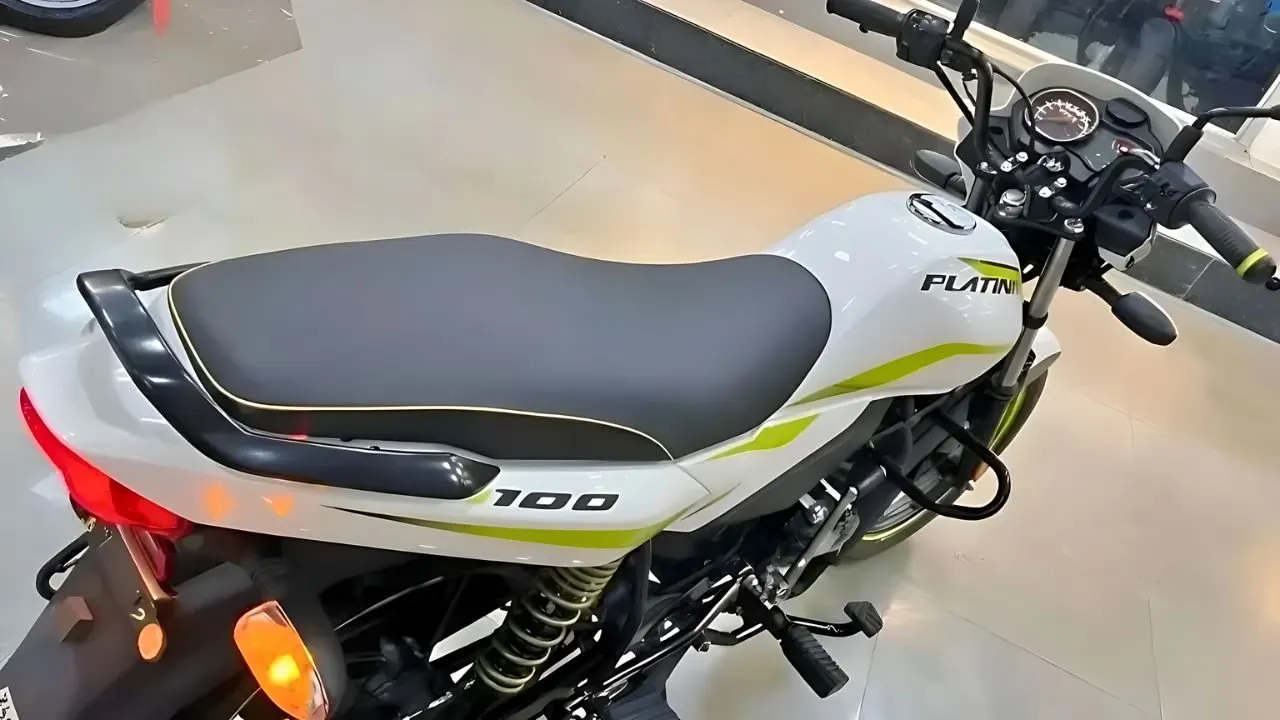
Ninety-five kilometres per litre. Let that number sit for a moment. In a market where 60 kmpl earns headlines and anything above 70 kmpl is considered exceptional, the Bajaj Platina 2026’s claimed fuel efficiency figure lands like a genuinely disruptive statement. Bajaj Auto has just officially unveiled the 2026 edition of one of India’s most enduring commuter motorcycles, and if the efficiency claim holds up under real-world scrutiny, this may be the most economical petrol-powered two-wheeler available in the country today.
The Platina has never been a motorcycle that chases attention. Its appeal has always been quieter and more practical — a machine that earns loyalty through low running costs, mechanical dependability, and the kind of unpretentious usability that millions of Indian commuters, delivery riders, and small-town daily users actually need. The 2026 model keeps that core identity firmly intact while delivering meaningful updates across design, refinement, and efficiency that make a compelling case for its continued relevance in an increasingly crowded segment.
Design: A Refresh That Respects the Buyer
Updated Without Overreaching
Bajaj has approached the Platina 2026’s design update with the same pragmatism that has always defined the model. This is not a motorcycle trying to look like something it is not. The revisions are focused and purposeful — a cleaner headlamp unit at the front, updated graphics and decal work, fresh colour options, and chrome accents placed with enough restraint to add a sense of occasion without sliding into excess.
The slim bodywork and lightweight overall structure remain central to the Platina’s identity, and for good reason. In dense urban traffic and on narrower semi-urban roads, a lighter, narrower motorcycle is not just easier to ride — it is genuinely less fatiguing over a full day of use. The 2026 model preserves these practical dimensional advantages while presenting them in a slightly more contemporary visual package.
For the buyer the Platina targets — office commuters, delivery personnel, riders in smaller cities and rural areas making practical rather than aspirational purchase decisions — this level of design update is precisely right. More radical styling would alienate rather than attract.
The 95 kmpl Claim: Understanding What It Means
A Number That Demands Context
The 95 kmpl claimed mileage is the headline that will define conversation around the Bajaj Platina 2026, and it deserves honest analysis rather than uncritical repetition. Bajaj attributes this figure to advanced combustion calibration, a refined lightweight powertrain, and improved fuelling efficiency in the single-cylinder engine. The claimed figure emerges from standardized testing conditions — controlled speed, optimal load, and ideal surface conditions — that rarely reflect the full complexity of real-world Indian commuting.
A realistic real-world expectation under typical mixed-use conditions — city stop-start traffic, occasional highway runs, varied rider weight — would likely settle in the 70–80 kmpl range for most users. That is still a number that places the Platina 2026 at or near the top of the commuter segment efficiency rankings, and for a rider covering 50–60 km daily, the fuel cost savings relative to a 50–55 kmpl competitor compound into meaningful annual savings.
Why Efficiency Still Matters More Than Ever
India’s fuel price environment has created a buyer base that calculates running costs with genuine precision. In smaller cities and rural markets particularly, where incomes are more constrained and motorcycles serve as primary rather than secondary transportation, every additional kilometre per litre translates directly into household budget relief. The Platina has historically addressed this need better than most, and the 2026 model pushes that advantage further.
Engine Refinement and Everyday Performance
The single-cylinder engine powering the Bajaj Platina 2026 carries refined calibration aimed at two specific improvements over its predecessor: smoother operation through reduced vibration, and quieter mechanical character at typical commuting speeds.
Both improvements matter considerably to the buyer profile this motorcycle serves. Someone spending two or three hours daily on a motorcycle notices vibration and mechanical noise far more acutely than an occasional weekend rider. Bajaj’s work on reducing both — through improved engine mounting, tighter component tolerances, and refined combustion mapping — directly improves the quality of the daily ownership experience in ways that specifications alone do not capture.
Throttle response is linear and accessible, highway speeds are manageable and sustainable, and the overall performance envelope matches the realistic demands of its intended use without attempting to exceed them artificially.
Comfort: A Core Competency Maintained
The Platina series built its reputation on rider comfort, and the 2026 model continues to treat this as a primary engineering objective rather than an afterthought. The seat width and cushioning accommodate extended riding durations for both rider and pillion — a consideration that carries real weight in a market where family use and multi-passenger commuting are everyday realities rather than edge cases.
The upright ergonomic riding position minimizes the cumulative physical fatigue that builds across long daily commutes, keeping the riding experience sustainable across age groups and fitness levels. The suspension calibration handles the variable surface quality of Indian roads — urban potholes, semi-rural broken tarmac, rural unpaved sections — with the kind of composed absorption that contributes directly to long-term rider loyalty.
Instrumentation and Practical Features
The instrument cluster on the 2026 Platina delivers speed, fuel level, trip data, and essential warning indicators in a clear, legible layout. Bajaj has prioritized readability and reliability over visual complexity here — an approach that aligns correctly with a buyer base that values information clarity over feature novelty.
This is a motorcycle where every design and feature decision traces back to a practical ownership question: does this make the bike more useful, more reliable, or more affordable to own? Where the answer is yes, Bajaj has included it. Where it adds cost without proportionate practical benefit, they have left it out. That discipline is part of what keeps the Platina competitive in a segment where price sensitivity is extreme.
Safety and Chassis Dynamics
The braking hardware on the Bajaj Platina 2026 has been upgraded to deliver more consistent stopping performance across the range of conditions Indian commuters encounter — wet surfaces, dusty roads, and the sudden stop demands of heavy urban traffic. The chassis geometry prioritizes straight-line stability and predictable low-speed handling over dynamic cornering performance, which is the correct priority calibration for this use case.
The suspension tune manages road surface irregularities effectively at commuting speeds, maintaining rider composure and vehicle stability without the harshness that undermines confidence on poorly surfaced roads.
Pricing, Value, and Market Position
The Budget Commuter Calculus
Bajaj has not confirmed a specific launch price for the 2026 Platina at the time of writing, but the model has historically occupied the ₹65,000–₹80,000 bracket — a range that places it in direct competition with Hero HF Deluxe, Honda CD 110 Dream, and TVS Sport. Within that bracket, the Platina’s efficiency advantage has historically been its strongest differentiator, and the 2026 model’s 95 kmpl claim, even discounted for real-world conditions, extends that advantage further.
Who Actually Buys the Platina
The Platina buyer is frequently overlooked in motorcycle media coverage that gravitates toward sportier, more visually interesting products. But this buyer represents one of the largest and most consistent purchasing groups in the Indian two-wheeler market — practical, budget-conscious, and making decisions based on total cost of ownership over three to five years rather than on launch-day excitement.
For this buyer, Bajaj’s extensive national service network carries as much weight in the purchase decision as the motorcycle’s specifications. Reliable, affordable servicing close to home is not a convenience — it is a necessity. The Platina’s combination of low maintenance complexity and Bajaj’s dealer reach addresses this directly.
The Bigger Picture
The Bajaj Platina 2026 does not arrive with the fanfare of an electric vehicle launch or the social currency of a premium streetfighter. It arrives instead as a considered, disciplined update to a motorcycle that has served millions of Indian riders faithfully — and it delivers a fuel efficiency figure that, even accounting for the gap between claimed and real-world numbers, repositions the benchmark for what a budget commuter motorcycle should deliver in 2026.
As fuel costs remain a persistent pressure on household budgets and the commuter segment continues to draw buyers who cannot yet access electric alternatives at practical price points and range figures, the Platina’s value proposition becomes sharper rather than softer. Bajaj appears to understand exactly where this motorcycle fits in the market and exactly what its buyer needs from it.
That clarity of purpose, sustained across decades of the Platina’s production history, remains its most underrated strength — and the 2026 model carries it forward with genuine conviction.