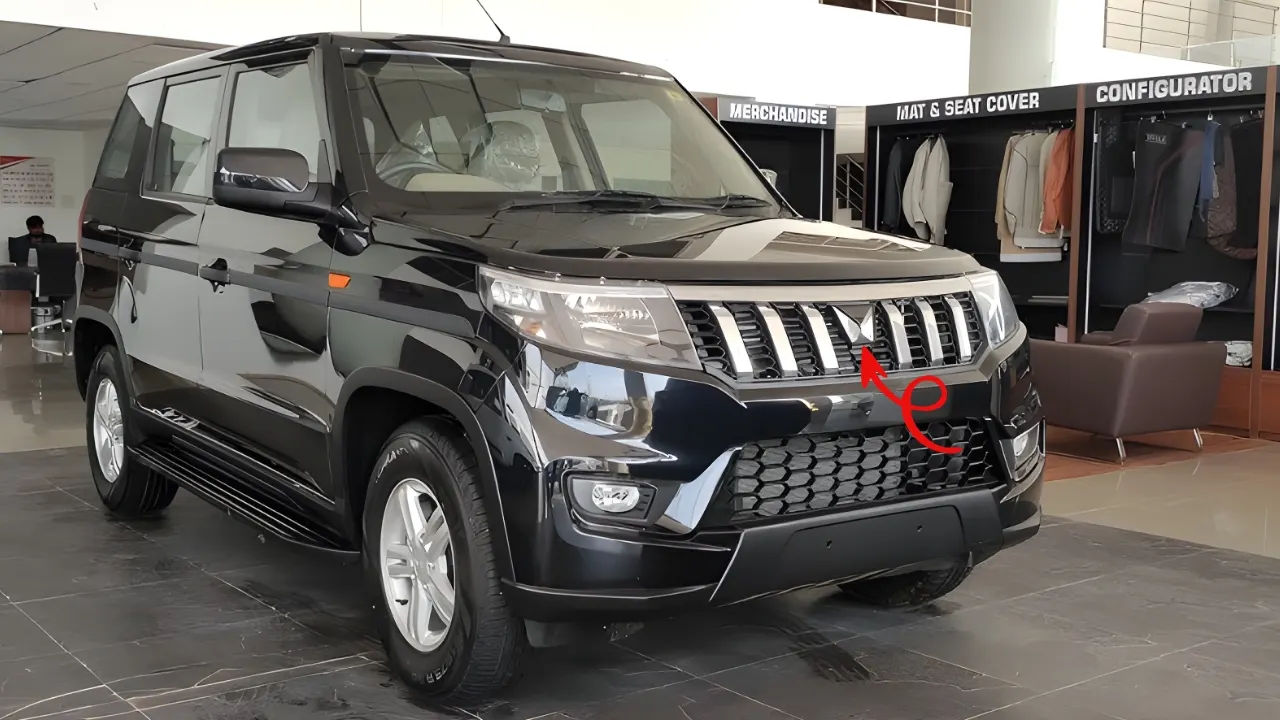
The Bolero name has meant something specific to Indian buyers for over two decades — not luxury, not technology novelty, not urban lifestyle positioning, but something considerably more durable and practically valuable: the confidence that wherever you need to go, this machine will take you there and bring you back. That reputation has been earned across some of India’s most demanding terrain, in the hands of farmers, rural professionals, fleet operators, and families for whom vehicle reliability is not a preference but a necessity. The Mahindra Bolero Neo 2026 carries that heritage forward into a new product generation that adds modern comfort, updated technology, and a more refined interior without surrendering the rugged fundamentals that made the Bolero irreplaceable for its core buyer.
At a starting price of ₹7 lakh, the Bolero Neo 2026 arrives in a sub-compact SUV market that has tilted heavily toward monocoque crossovers with urban-optimised suspension and car-like dynamics. Mahindra has made no attempt to chase that direction. Instead, the 2026 Neo doubles down on the ladder-frame construction, diesel powertrain efficiency, and ground-level capability that its buyers actually need — while adding enough interior modernisation and feature content to make the vehicle feel contemporary rather than merely traditional. That combination, at this price point, makes a case that the crossover-dominated competition cannot directly answer.
Design: Traditional Strength Meets Contemporary Detail
A Familiar Face, Thoughtfully Refreshed
The Mahindra Bolero Neo 2026 does not attempt a visual revolution, and that is precisely the correct decision for a nameplate whose buyers choose it partly because of what it looks like. The Bolero’s visual identity — the upright proportions, the muscular wheel arch treatment, the high ground clearance stance, the Mahindra signature body cladding — communicates capability before any specification is consulted, and that communication resonates with the buyer who has learned to trust that correlation.
What the 2026 Neo adds to that foundation is refinement in the details. The front fascia receives sharper headlamp units and cleaner bumper architecture that move the design’s execution quality forward without departing from its established character. The body lines carry more precision than earlier Bolero generations managed — a reflection of improved manufacturing accuracy rather than design direction change.
The ladder-frame chassis construction shared with the Scorpio contributes structural rigidity and torsional strength that monocoque alternatives at this price cannot match — and it provides the mounting foundation for the 15-inch all-terrain tyre specification that gives the Neo its terrain-crossing competence. The compact overall dimensions maintain the urban agility that semi-rural and small-city buyers — who need to navigate both open country roads and busy town centres — value in a practical daily vehicle.
Interior: A Meaningful Step Forward in Cabin Quality
Modern Comfort Without Abandoning Practicality
Step into the Bolero Neo 2026 and the improvement over earlier Bolero generations is immediately apparent in the quality language of the cabin. The dual-tone dashboard treatment creates a fresher, more welcoming visual environment than the functional-but-austere interiors that the Bolero nameplate has historically offered. Premium fabric seating, a multifunction steering wheel, and better surface material choices across the dashboard and door panels collectively elevate the cabin’s perceived quality to a level that earlier buyers would not have associated with the Bolero name.
The upright seating position that defines the Bolero’s ergonomic character remains, and rightly so — in a vehicle that rural and semi-urban buyers use on roads where forward visibility and postural clarity matter for safety, the high-set, commanding view that upright seating provides is a functional asset rather than a stylistic compromise.
The seven-seat configuration — with a foldable third row — addresses the family and fleet use cases that represent a significant portion of the Bolero Neo’s purchase intent. When the third row is not required, its fold-flat capability maximises cargo space for the kind of practical utility loading — agricultural goods, business stock, family luggage — that Bolero buyers regularly undertake. Practical storage provisions throughout the cabin add the everyday convenience that extended journey use demands.
Engine and Performance: Diesel Torque for Real-World Demands
1.5L mHawk: The Right Engine for This Vehicle
The 1.5-litre mHawk diesel engine powering the Mahindra Bolero Neo 2026 produces 100 horsepower and 260 Nm of torque — a specification that prioritises the kind of pulling strength at low and mid engine speeds that rural and semi-urban driving demands over the high-rpm power delivery that urban performance metrics chase. This torque character makes the Neo feel strong and capable in the scenarios that matter most to its buyers: loaded climbs on gradient roads, fully-occupied seven-seat highway runs, pulling out of soft surface terrain situations, and managing the low-speed technical challenges of narrow village roads.
The 5-speed manual gearbox pairs with the diesel’s torque delivery to provide confident, predictable gear selection across the engine’s operational range without demanding the kind of frequent gear changes that urban driving on lower-torque petrol engines often requires. For a buyer who spends more time on rural roads than city expressways, this manual-diesel combination remains the most practically satisfying drivetrain option available at this price point.
Micro-Hybrid Technology: Fuel Savings Without Complexity
Mahindra’s Micro-Hybrid system — which shuts the engine down during stationary idling and restarts it when the driver is ready to move — delivers incremental fuel efficiency improvement without the battery complexity, charging infrastructure considerations, or cost premium that full hybrid systems introduce. For a buyer whose ownership horizon and annual distance profile amplifies every rupee per kilometre in running costs, this fuel economy benefit accumulates into a meaningful total across the ownership period.
The system operates transparently, requiring no driver adaptation beyond the awareness that the engine will stop when stationary and restart reliably on demand. In the semi-urban and rural use conditions where the Neo operates most of its life, where traffic stops are less frequent and shorter than metropolitan environments, the system’s contribution is proportionate and practically sensible.
Ride and Handling: Tuned for India’s Actual Roads
The suspension architecture on the Mahindra Bolero Neo 2026 — front double wishbones and a rear multi-link setup — reflects a calibration priority that differs fundamentally from monocoque crossover competitors: managing the large-amplitude, unpredictable surface events of rural Indian roads rather than optimising for the dynamic handling of smooth urban tarmac.
This calibration produces a ride character that is firm and composed rather than pliant and car-like — a distinction that the Bolero’s buyer base understands and accepts as part of the vehicle’s capability profile. The suspension manages the deep potholes, broken surface sections, and abrupt elevation changes that rural and semi-urban roads regularly present without the chassis instability or occupant discomfort that inadequately specified alternatives produce in equivalent conditions.
Power steering lightness makes low-speed maneuvering in tight village lanes and congested market areas manageable without physical effort — a daily quality-of-life feature that matters considerably to buyers who navigate these environments regularly. The predictable handling character across varied surfaces provides the driver confidence that comes from knowing exactly how the vehicle will respond to steering and braking inputs under varied load and terrain conditions.
Features and Technology: Relevant, Not Excessive
Mahindra has approached the Bolero Neo 2026’s technology specification with disciplined pragmatism — including features that deliver genuine daily utility value for the target buyer while avoiding the feature-loading that adds cost without proportionate benefit for an audience that prioritises reliability and durability over novelty.
The 7-inch touchscreen infotainment system provides navigation, Bluetooth connectivity, and USB integration in a format that covers the connectivity needs of the Bolero Neo’s buyers without the complexity of larger, more feature-dense systems. Electrically adjustable mirrors, power windows, central locking, and a height-adjustable driver’s seat address the everyday convenience expectations that have become baseline requirements even in vehicles targeting practical rather than premium buyers.
Safety hardware in higher specification variants — dual airbags, ABS with EBD, rear parking sensors, and corner braking control — establishes a protective foundation that increasingly informed Indian buyers now evaluate carefully regardless of vehicle price bracket. The inclusion of these features at the Neo’s price point reflects Mahindra’s recognition that safety is no longer a premium differentiator but a purchase expectation across the segment.
The Mechanical Locking Differential: A Real Off-Road Advantage
The Mechanical Locking Differential available on top Bolero Neo 2026 variants deserves specific mention because it represents a capability that no monocoque crossover competitor at this price — or considerably above it — provides. An MLD allows equal power distribution to both rear wheels regardless of traction differential between them — the critical capability that separates a vehicle that manages soft ground, river crossings, and loose surface terrain from one that merely looks like it can.
For the rural buyer who regularly encounters genuinely challenging terrain as part of normal vehicle use rather than occasional adventure, this hardware represents the difference between a vehicle that is a reliable tool and one that becomes a problem requiring external assistance. Mahindra’s decision to offer this capability on the Neo — at a starting price of ₹7 lakh — reflects deep understanding of what its core buyer actually needs rather than what competitive marketing requires.
Market Positioning: Serving the Buyer No One Else Targets
The Segment That Monocoque Crossovers Cannot Serve
The Indian sub-compact SUV market has expanded dramatically, but the growth has concentrated in monocoque, urban-optimised crossovers that serve metropolitan and large-city buyers effectively while progressively underserving the rural, semi-urban, and small-city buyer who needs genuine ground clearance, diesel torque, ladder-frame durability, and the capability to operate reliably without proximate service infrastructure.
The Mahindra Bolero Neo 2026 targets this underserved buyer with a specificity that its monocoque competitors cannot replicate without fundamentally changing their vehicle architecture. Maruti’s Vitara Brezza, Hyundai’s Venue, and Tata’s Nexon all occupy overlapping price brackets but serve a genuinely different use case profile — urban-biased, efficiency-focused, comfort-prioritised. The Bolero Neo serves a different buyer making different demands on their vehicle, and at ₹7 lakh, it serves them exceptionally well.
Mahindra’s extensive rural service network — built across decades of Bolero and Scorpio distribution in markets far beyond metropolitan India — provides the after-sales support infrastructure that matters most to buyers for whom vehicle downtime is not inconvenience but income disruption.
The Road Ahead
The Mahindra Bolero Neo 2026 represents Mahindra at its most strategically clear-sighted — a manufacturer that understands its core buyer deeply, knows what that buyer needs from a vehicle, and delivers it without being distracted by the urban-crossover trend that has dominated Indian SUV product planning for the past five years.
At ₹7 lakh with 260 Nm of diesel torque, a ladder-frame chassis, seven seats, and genuine off-road capability, the Bolero Neo 2026 offers a value proposition that is simply not available from any other manufacturer at any comparable price point. For the buyer it serves — and that buyer represents one of India’s largest and most consistent automotive demand pools — the 2026 model is not a compromise purchase. It is the correct purchase, made by someone who knows exactly what they need and is satisfied that Mahindra has once again delivered it.
The Bolero legacy continues. The 2026 Neo ensures it will continue for years to come.