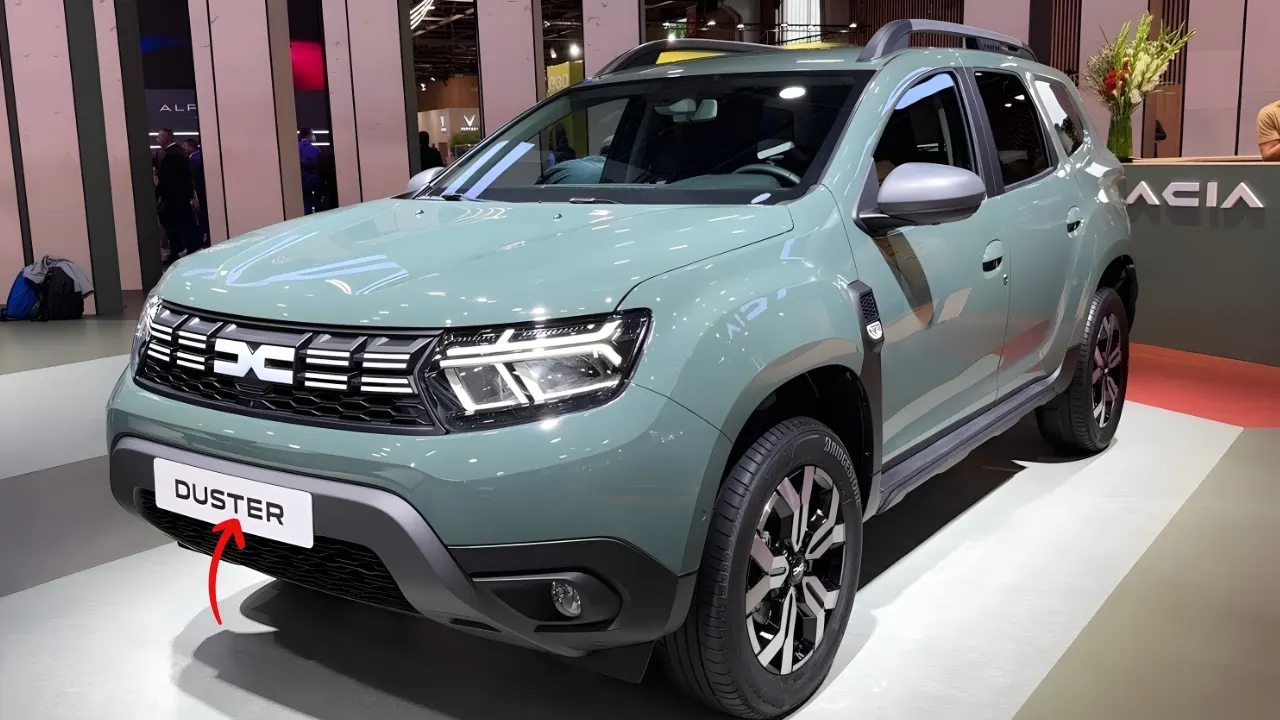
Few nameplates in Indian automotive history carry the kind of emotional weight the Duster does. When Renault first brought it to India over a decade ago, it changed how the market thought about what an affordable SUV could be — genuinely capable off-road, practically sized for real families, and priced where it mattered. Then it left. And buyers noticed. The return of the Renault Duster 2026, launched on Republic Day earlier this year and now heading toward showroom availability at prices between ₹11 lakh and ₹20 lakh, is not a quiet comeback. It is a comprehensive reinvention that brings the Duster’s adventure-ready DNA into direct, confident conflict with the Hyundai Creta, Kia Seltos, and Maruti Grand Vitara that have dominated the segment in its absence.
What makes this relaunch genuinely compelling is the depth of the transformation. This is not a refreshed version of the vehicle that left the market — it is a fundamentally new product built on an updated global platform, redesigned from the ground up for Indian road conditions with India-specific engineering decisions that go well beyond cosmetic localisation. A 212mm ground clearance, a strong hybrid powertrain option, six standard airbags, and India’s first Renault application of Level 2 ADAS technology all arrive in a package that the original Duster never came close to offering. The legend is back — and it has spent its time away learning.
Design: Built for Where Indian Roads Actually Go
Ground Clearance as a Design Statement
The 2026 Renault Duster’s exterior design makes its priorities visible immediately. The 212mm ground clearance — 50mm higher than the European Dacia version on which it is based — tells you everything about how Renault has calibrated this vehicle for its primary market. That clearance figure exceeds the Hyundai Creta’s 190mm meaningfully, and on Indian roads where the quality differential between a smooth city boulevard and a monsoon-damaged semi-urban road can appear within a single kilometre, the practical advantage is real and daily.
The front fascia combines a bold grille design with slim LED headlamps to create a face that reads as purposeful and adventurous without descending into the exaggerated aggression that characterises some mid-size SUV styling. India-specific reinforced bumpers add genuine functional protection while contributing to the boxy, muscular stance that the Duster’s global identity has always embraced.
Approach and departure angles of 26.9 and 34.7 degrees respectively are genuine off-road capability indicators rather than specification filler — these numbers mean the Duster can navigate terrain transitions that would ground-scrape competitors into reluctant retreat. Connected rear tail lamps and a roof spoiler complete a rear treatment that is clean and confident. The overall visual character communicates adventure readiness in a way that showroom-polish-focused competitors in this segment do not.
Interior: The Biggest Change from the Duster You Remember
A Cabin That Resets Expectations
If the original Duster’s reputation included one consistent criticism, it was the cabin — functional, honest, but spartan in ways that felt increasingly dated as the segment around it raised interior quality standards. The 2026 model addresses this directly and without compromise. Soft-touch surface materials, customisable ambient lighting with green accent themes, and a design coherence throughout the dashboard create a cabin that feels genuinely contemporary rather than merely upgraded.
The 10.1-inch touchscreen infotainment system with wireless Apple CarPlay and Android Auto sits alongside a 10.24-inch fully digital driver display — a dual-screen arrangement that brings the Duster’s information architecture into alignment with what segment buyers now consider standard rather than exceptional. Ventilated front seats with six-way power adjustment, dual-zone climate control, a panoramic sunroof, and a wireless charging pad collectively represent a feature step-up from the previous generation that buyers who drove the original will find startling in the most positive sense.
The boot capacity range of 518 to 700 litres — expanding as rear seats fold — is a practical advantage that matters for the family trip use case the Duster targets. Combined with improved rear legroom and enhanced sound insulation, the 2026 Duster’s cabin makes the case that Renault has listened carefully to everything owners and prospects said about what the original got wrong.
Powertrain Choices: No Diesel, Plenty of Options
Three Engine Options With Different Buyer Arguments
Renault’s decision to drop diesel from the 2026 Duster’s Indian powertrain lineup reflects the broader market shift that has seen petrol and hybrid options take over the mid-size SUV conversation as diesel’s price advantage has narrowed and BS6 compliance costs have risen. Three distinct powertrain options address a wide range of buyer priorities.
The 1.0-litre turbocharged petrol entry engine producing 99hp and 160Nm provides the starting point — available with both manual and CVT transmission, it delivers adequate urban performance at a price that keeps the entry variant accessible. Mid-specification buyers receive the significantly more capable 1.3-litre turbo-petrol pushing 156hp, mated to either a manual or dual-clutch transmission — a powertrain that transforms the Duster’s highway character and makes long-distance touring genuinely enjoyable rather than merely manageable.
The Strong Hybrid: Where the Duster’s Value Argument Gets Serious
The 1.8-litre strong hybrid system — combining a 109hp petrol engine with a 49hp electric motor for a combined 160PS output, managed through an 8-speed hybrid transmission — is the powertrain that distinguishes the 2026 Duster most clearly from its competitive set. A claimed efficiency of over 20 kmpl for a mid-size SUV with genuine off-road capability represents a running cost proposition that buyers comparing the Duster against the Creta and Seltos will find difficult to dismiss.
This is not a mild-hybrid system that delivers marginal fuel savings. The strong hybrid architecture contributes meaningful electric assistance across the full driving speed range, with genuine electric-only capability at lower speeds that urban commuters can exploit daily. In a segment where diesel’s efficiency advantage has been the traditional argument for buyers prioritising running costs, the Duster’s hybrid option constructs an alternative case that is both credible and genuinely competitive.
The 4×4 variants add terrain mode selection, hill descent control, and the full benefit of the 212mm ground clearance for buyers whose Duster use extends beyond urban roads and smooth highways — a specification combination that no competitor at this price range currently offers.
Safety and Technology: Segment Leadership at ₹11 Lakh
Level 2 ADAS in a Sub-₹20 Lakh SUV
The 2026 Renault Duster marks Renault India’s first application of Level 2 ADAS technology — autonomous emergency braking, lane-keeping assistance, and adaptive cruise control — in a production vehicle for the Indian market. That these features appear in an SUV starting at ₹11 lakh represents a meaningful democratisation of active safety technology that has significant implications for the segment’s competitive dynamics going forward.
Six airbags as standard equipment, electronic stability programme, traction control, a 360-degree camera system, and tyre pressure monitoring complete a safety specification that places the Duster at or above the segment average on passive and active protection simultaneously.
The Arkamys 3D audio system addresses a feature category that buyers in this price bracket increasingly evaluate seriously, and over-the-air software update capability ensures that both technology and safety features remain current across the ownership period without requiring dealer visits — a convenience that younger buyers particularly value in a market increasingly accustomed to smartphone-style product updates.
Competitive Positioning: Where the Duster Wins Arguments
A Different Kind of Mid-Size SUV
The Hyundai Creta leads this segment by volume and does so for good reasons — refinement, brand trust, feature content, and a wide variant range that catches buyers across a broad price spread. The Kia Seltos brings strong technology credentials and premium interior quality. The Maruti Grand Vitara contributes hybrid efficiency and Maruti’s unmatched service reach. Against all three, the 2026 Renault Duster’s argument is differentiated rather than directly competitive on the same dimensions.
The Duster wins decisively on ground clearance — 212mm versus the Creta’s 190mm is a meaningful real-world performance difference on the semi-urban and rural roads where a substantial portion of Indian mid-size SUV buyers actually drive daily. It wins on boot space, with the 518-litre base figure exceeding most segment competitors and the expandable 700-litre configuration offering genuine family trip capability. And it wins uniquely on the 4×4 option — a hardware capability that no Creta or Seltos buyer can access at any price point.
The hybrid powertrain closes the efficiency gap with the Grand Vitara’s established hybrid credentials while offering the Duster’s superior off-road geometry as an additional benefit. The combined package — off-road capability, hybrid efficiency, Level 2 ADAS safety, and a genuinely premium new interior — at ₹11–20 lakh represents a value proposition that the segment has not seen in this specific form before.
What Buyers Should Know Before Showroom Visits
The Renault Duster 2026 is expected in showrooms by mid-2026, and Renault’s anticipation of strong demand makes early booking a pragmatic recommendation for buyers whose consideration set is already narrowing toward the Duster. The variant structure across the ₹11–20 lakh price range likely concentrates the strongest value at the mid-tier 1.3-litre and hybrid specifications, where the premium over entry pricing is likely to be justified by the powertrain capability and feature addition.
Buyers coming from the original Duster should temper any expectations based on the previous generation’s driving character and interior quality — the 2026 model is a substantially different vehicle, and the differences are uniformly improvements. Buyers entering the segment fresh who have been considering the Creta or Seltos should specifically drive the Duster’s hybrid variant and assess the 4×4 off-road configuration against their actual use patterns before making a final decision.
The Bigger Picture
The Renault Duster 2026 Launched in India represents something more than a product comeback. It is a demonstration that a brand can leave a market, study it carefully from a distance, and return with a product that addresses its audience’s evolved expectations more completely than the continuous-iteration alternatives that never left.
The original Duster changed how India thought about affordable SUVs. The 2026 model arrives with the ambition to do that again — this time with hybrid efficiency, Level 2 safety technology, a premium interior, and the same adventure-ready ground clearance philosophy that made the nameplate worth missing in the first place.
The mid-size SUV segment in India just became considerably more competitive. For buyers, that is exactly the right outcome.