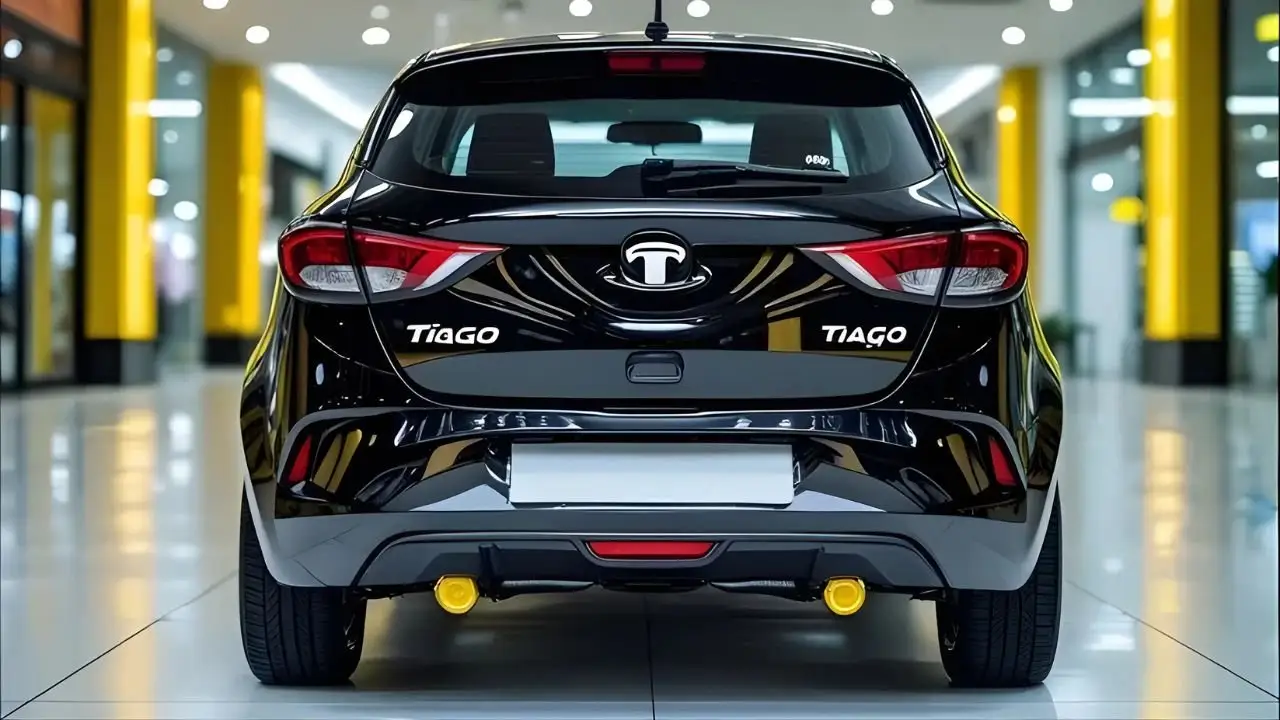
There is a reason the Tata Tiago has remained one of India’s most consistently relevant entry-level hatchbacks since its debut. It has never tried to be something it is not — it delivers honest, practical, well-built motoring at a price that first-time car buyers and small families can genuinely access. The Tata Tiago 2026 builds on that foundation with an update that addresses every dimension where the segment has evolved: design, fuel efficiency, interior quality, and feature content. At a starting price of approximately ₹6 lakh, it arrives with a 36 kmpl claimed mileage figure that immediately commands attention in a segment where running costs drive purchase decisions as much as anything else.
The timing of this reveal is well-considered. The entry-level hatchback segment in India faces pressure from multiple directions simultaneously — used car accessibility at lower price points, the gradual downward drift of CNG vehicle pricing, and the aspirational pull of sub-compact SUVs for buyers who can stretch their budget slightly. Tata Motors’ response with the 2026 Tiago is not to abandon the hatchback’s core value proposition but to sharpen it aggressively — better efficiency, more visual confidence, and enough technology to make the car feel contemporary rather than compromised.
Design: A Bolder Face for a Familiar Name
Exterior Updates That Shift the Perception
The Tiago has always been a well-proportioned compact hatchback, but its visual presence in traffic has occasionally felt understated rather than assertive. The 2026 model addresses this with a front fascia revision that introduces a sharper grille design and more defined headlamp clusters — changes that give the car a more purposeful expression at the nose without departing from the friendly, accessible character that has always been central to the Tiago’s identity.
The redesigned front and rear bumpers add a degree of sportiness that the previous generation hinted at but did not fully commit to. New alloy wheel designs across mid and upper variants improve the profile view considerably, and a refreshed colour palette gives buyers more options to express individual preference within a practical compact package.
The side profile retains the Tiago’s compact dimensions — a genuine practical advantage on the narrow roads, tight parking situations, and congested urban environments that define daily car use for most of its buyers. Tata has resisted the temptation to bloat the exterior in the name of perceived premium positioning, and that restraint is the right call for this product.
Interior: Premium Ambition Within Practical Constraints
A Cabin That Overdelivers at ₹6 Lakh
The 2026 Tiago’s interior revision is where the car makes its most meaningful step forward relative to both its predecessor and its direct competitors. The redesigned dashboard introduces improved surface materials and a dual-tone colour treatment that immediately creates a sense of space and considered design in what is, by necessity, a compact cabin.
Seat cushioning has been specifically upgraded — a detail that buyers who spend significant time commuting in traffic notice and value over time, even if it does not generate headlines at launch. Headroom and legroom have been preserved despite the compact footprint, making the Tiago a practical five-occupant vehicle rather than a theoretical one where rear passengers face genuine discomfort beyond short trips.
The touchscreen infotainment system serves as the cabin’s technological centrepiece, offering smartphone mirroring for navigation, music, and hands-free calling in a format that modern buyers now treat as a baseline expectation rather than a feature. Higher specification variants add automatic climate control and steering-mounted controls — conveniences that meaningfully improve the daily driving experience and place the Tiago in genuine competition with hatchbacks priced considerably higher.
Engine and Performance: 84PS That Gets the Job Done
A Powertrain Tuned for Real-World Indian Commuting
The engine in the Tata Tiago 2026 produces 84PS — a figure that positions it competitively within the entry-level hatchback segment and delivers meaningful responsiveness for the urban and semi-urban driving conditions that represent the vast majority of real-world Tiago use.
The powertrain’s character has been tuned specifically for smoothness at the lower end of the rev range, where Indian city driving concentrates most of its demands. Noise, vibration, and harshness management has been improved over the previous generation — a dimension of refinement that entry-level hatchback buyers increasingly notice as their reference point shifts from older vehicles with less stringent NVH control to newer products where refinement standards have risen across the segment.
The transmission pairing delivers a balanced driving experience across both manual and automatic options, making the Tiago accessible to both confident urban drivers and those making the transition from two-wheelers to four-wheelers for the first time.
The 36 kmpl Claim: Efficiency as a Strategic Weapon
Understanding the Number in Segment Context
The 36 kmpl claimed fuel efficiency that leads the Tiago 2026’s headline specifications requires the same honest contextualisation that all claimed efficiency figures demand. This number emerges from standardized testing protocols rather than real-world mixed driving conditions, and buyers should calibrate expectations accordingly.
A realistic real-world efficiency range for the Tiago 2026 under typical Indian urban and highway mixed-use conditions would likely sit between 22–28 kmpl depending on driving style, road conditions, air conditioning usage, and passenger load. Even at the conservative end of that range, the Tiago 2026 delivers fuel costs per kilometre that make a compelling annual savings argument against both less efficient hatchbacks and the ₹6 lakh segment’s alternative options.
For the primary Tiago buyer — someone covering 30–50 km daily in urban traffic, calculating fuel expenditure as a meaningful monthly household budget line — this efficiency performance translates into thousands of rupees in annual savings that accumulate across the entire ownership period.
Safety: Tata’s Defining Competitive Advantage
Tata Motors has built its brand identity in the Indian passenger car market substantially around safety credibility, and the Tiago 2026 carries that commitment into the entry-level segment where safety hardware has historically been more variable. Standard fitment of dual airbags and ABS with EBD provides the occupant protection baseline that informed buyers — and increasingly, regulatory requirements — demand at this price point.
Rear parking assistance addresses the practical visibility limitations of a compact hatchback with a truncated rear design, making urban reversing and parking a more confident operation for less experienced drivers. The underlying platform’s structural engineering contributes to the Tiago’s safety credentials in ways that passive safety hardware alone does not capture — Tata’s investment in structural rigidity across its vehicle range has delivered segment-leading crash test outcomes in the recent past, and the Tiago 2026 inherits that foundation.
For families making their first four-wheeler purchase and prioritizing occupant protection as a non-negotiable consideration, Tata’s safety reputation at this price point is a genuine differentiator that competitors have not consistently matched.
Road Manners: Engineered for Indian Conditions
The Tiago 2026’s chassis setup prioritizes the characteristics that Indian road conditions demand rather than the dynamics that European test tracks reward. Light, accurate steering reduces fatigue in the stop-start rhythm of urban traffic and makes low-speed maneuvering intuitive for drivers of varying experience levels. The suspension calibration manages the variable surface quality of Indian roads — from smooth urban tarmac to broken semi-urban surfaces and the occasional rural track — with composure that keeps the car’s behaviour predictable and comfortable rather than harsh or nervous.
Compact dimensions remain one of the Tiago’s most underappreciated practical advantages. In a country where urban road widths, parking lot designs, and residential colony lane widths frequently accommodate small cars more comfortably than they accommodate the SUVs that are increasingly aspirational, the Tiago’s footprint is a genuine daily-use asset rather than a compromise.
Pricing and Competitive Landscape
₹6 Lakh in a Segment That Has Never Been More Competitive
At approximately ₹6 lakh for the entry variant, the Tata Tiago 2026 positions itself at the heart of India’s most price-sensitive and volume-significant passenger car segment. Its primary competitors — the Maruti Suzuki Celerio, Hyundai Grand i10 Nios, and the Renault Kwid — each bring specific strengths to the comparison.
The Maruti offerings carry the weight of India’s most extensive service network and the resale value premium that the Maruti badge commands. The Grand i10 Nios delivers refined driving manners and strong feature content. Against both, the Tiago 2026 argues on safety credibility, fuel efficiency, and the improving quality perception that Tata Motors has built systematically across its product range over the last five years.
For a buyer approaching this segment with a five-year total cost of ownership perspective rather than a purchase-day sticker price focus, the Tiago’s combination of claimed efficiency, safety standard, and improving brand quality trajectory presents a compelling calculation.
Tata’s Broader Market Position
The Tiago’s success matters to Tata Motors beyond its own volume contribution. It functions as the entry point into the Tata ownership ecosystem — the car that introduces first-time buyers to the brand and establishes the foundation for potential progression to Punch, Nexon, or Harrier in future purchase cycles. Delivering a genuinely impressive product at ₹6 lakh strengthens that ecosystem entry point and builds the brand loyalty that supports Tata’s premium product aspirations.
What Comes Next
The Tata Tiago 2026 arrives as a meaningfully improved and well-considered iteration of one of India’s most trusted hatchbacks. The efficiency claim, the design refresh, the interior quality step, and the safety foundation collectively make a strong case at the ₹6 lakh price point — and Tata’s growing reputation for delivering on its launch promises adds credibility to the specification sheet.
As the entry-level hatchback segment faces continued structural pressure from alternative mobility options and aspirational segment migration, the Tiago 2026’s job is to remind buyers that a well-engineered, well-specified compact hatchback remains one of the most sensible and satisfying automotive decisions available at this price. On the evidence of what Tata has revealed, it makes that argument convincingly.
The Tiago has always been about honest, intelligent value. The 2026 model delivers that promise with more confidence than any version before it.