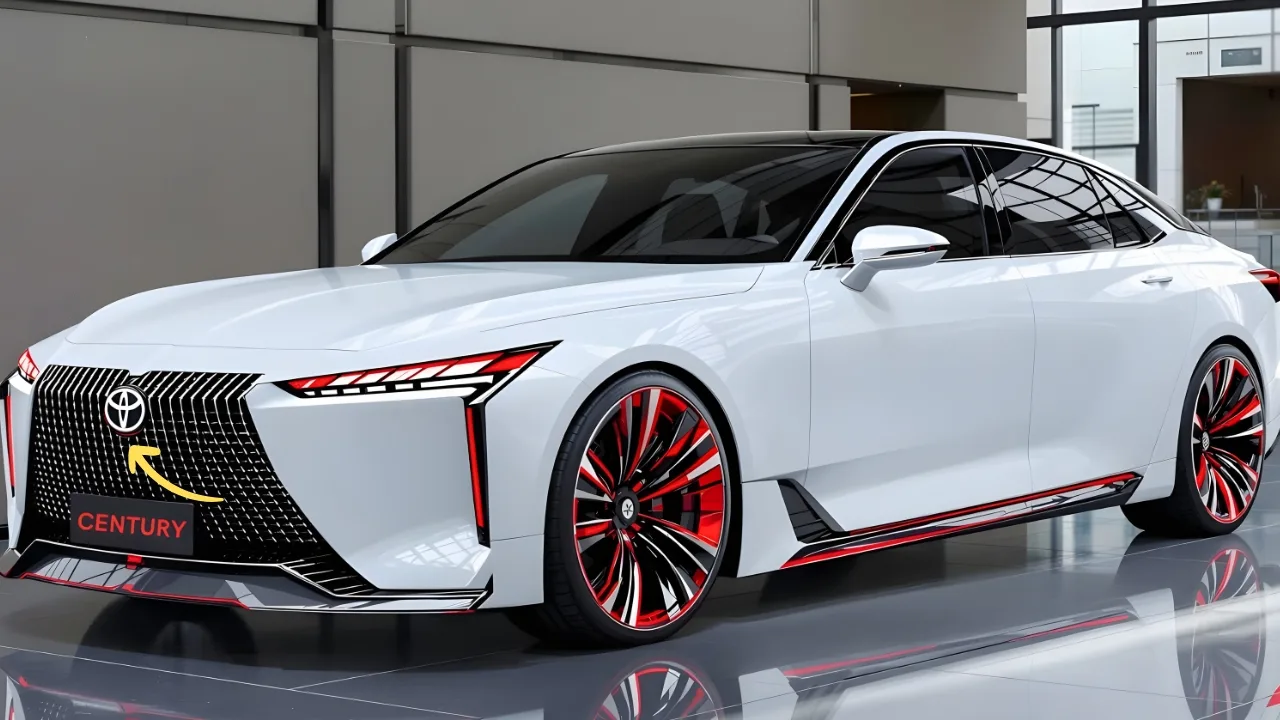
There is a particular kind of luxury that does not announce itself. It does not arrive in a blaze of chrome excess or a cacophony of horsepower figures. It arrives quietly, with absolute confidence, in the knowledge that the people it is built for already understand its value without needing to be told. The Toyota Century 2026 has been unveiled for the American market, and it embodies that philosophy more completely than perhaps any other vehicle available at any price today. This is Japan’s most revered automotive nameplate — a machine that has served Japanese royalty and heads of state for decades — now arriving in the United States as a plug-in hybrid SUV starting at approximately $170,000.
The timing of this US market introduction is significant. American luxury SUV buyers have long had access to the German triumvirate of Mercedes-Maybach, BMW Alpina, and the upper reaches of Audi’s range, alongside British alternatives from Bentley and Rolls-Royce’s Cullinan. What has been conspicuously absent is a Japanese counterpoint — a vehicle that brings an entirely different cultural and engineering philosophy to the ultra-luxury SUV conversation. The Toyota Century 2026 Unveiled addresses that absence directly, and on its own terms rather than by imitating the European competition it targets.
Design: Presence Without Performance Theatre
An Exterior That Operates by Different Rules
The Toyota Century 2026’s exterior design does not follow the visual language of performance or aggression that dominates the American luxury SUV market. Instead, it operates by the principles of restrained authority — a design that communicates importance through proportion, surface quality, and the kind of detailing that reveals itself slowly rather than demanding immediate attention.
The grille’s distinctive phoenix emblem replaces the Toyota badge that adorns every other vehicle in the brand’s global range — a separation that underscores the Century’s position as something fundamentally apart from Toyota’s standard portfolio. Sharp LED lighting and carefully placed chrome accents contribute to a silhouette that reads as elongated, composed, and unmistakably deliberate.
Flush door handles and acoustic glass signal the Century’s cabin isolation priorities from the outside — these are not aesthetic choices but functional ones, contributing to the sound environment inside that represents one of the vehicle’s defining attributes. For the US market, bespoke colour options and personalisation possibilities allow individual buyers to further distinguish their specification from any other Century on the road.
The Rear Cabin: Where the Century Lives
Built for the Person Being Driven, Not the Driver
Ultra-luxury vehicles at the Century’s price point have always been evaluated primarily on what they offer the rear passenger — the executive, the dignitary, the individual whose time is valuable enough that the vehicle functions as a mobile workspace and sanctuary simultaneously. The Toyota Century 2026’s rear cabin addresses this requirement comprehensively.
Rear seats offer full reclining capability, massage functions, heating and ventilation, and integrated ottomans that transform the seating position from comfortable to genuinely restful across extended journeys. Large entertainment screens provide productive or leisure options for passengers who spend significant time in transit. Hand-finished wood trim, premium leather and wool upholstery options, and meticulous surface quality throughout the interior convey the kind of craftsmanship that buyers at this price point can feel in the tactile experience of every surface they touch.
Triple-layered glass combined with active noise cancellation creates a cabin acoustic environment that is closer to a private study than a vehicle interior. Road noise, engine sound, and exterior ambient noise are suppressed to a degree that makes telephone calls, quiet conversation, and focused work all feel natural rather than effortful — a cabin characteristic that buyers in the Century’s target demographic value more highly than any performance specification.
Optional partitions and enhanced privacy glazing allow rear occupants to control their environment and visibility to the outside world — features that serve both practical and security-related requirements for the high-profile buyers Toyota anticipates will constitute the Century’s primary US customer base.
Powertrain: 400 Horsepower in Service of Serenity
A 3.5L V6 Plug-In Hybrid That Prioritizes Smoothness
The 3.5-litre V6 plug-in hybrid system in the Toyota Century 2026 produces approximately 400 horsepower — a figure that exists not to enable sports car performance but to ensure that the vehicle’s considerable mass accelerates and cruises with the kind of effortless composure that defines the luxury experience this car promises. The 0-60 mph capability of under five seconds is a safety and confidence asset as much as a performance one, providing immediate power reserve for highway merging, overtaking, and the occasional driver-focused scenario where urgency is required.
The electric-only operating mode extends to approximately 40 miles of silent, zero-emissions city driving — a range that covers the majority of typical daily urban use for a vehicle likely to be based in metropolitan environments. For a buyer whose Century serves primarily as city transport with occasional longer journeys, the plug-in hybrid architecture makes genuine sense operationally, not just environmentally: silent electric operation in urban settings enhances the cabin isolation experience by removing the last remaining source of powertrain noise.
Combined fuel efficiency of 28–32 mpg for a full-size luxury SUV of the Century’s dimensions and capability represents strong engineering achievement and a meaningful differentiator from the combustion-only alternatives that dominate this price segment. For buyers with environmental sensitivity alongside luxury expectations — an increasingly significant and growing demographic in the American premium market — the Century’s hybrid credentials provide purchase justification that Rolls-Royce and Bentley currently cannot match.
Adaptive Air Suspension and All-Wheel Drive
The adaptive air suspension system manages the Century’s ride quality across the full range of American road surfaces — from the smooth urban boulevards of Manhattan to the highway expansion joints of interstate travel — with a character that the original press material describes as floating. This is not marketing language unique to the Century; it is a reasonably accurate description of what well-calibrated adaptive air suspension on a heavy, well-insulated luxury SUV actually delivers in practice. The all-wheel drive system provides year-round confidence and the occasional capability reassurance for buyers in markets with seasonal weather demands.
Technology: Sophisticated Without Intrusion
The Toyota Century 2026’s technology integration philosophy reflects a deliberate choice that distinguishes it from the technology-maximalist approach of some competitors. A large central display manages navigation, connectivity, and vehicle functions — supporting Apple CarPlay, Android Auto, and intuitive voice controls — but the interface design prioritizes legibility and ease over complexity. This is technology at the service of the occupant’s experience rather than technology as the experience itself.
Rear passenger controls for cabin settings — temperature, entertainment, privacy functions, seat adjustments — are accessible without requiring interaction with the driver or front-seat systems, preserving the independence and discretion that rear occupants at this tier expect.
Toyota Safety Sense — the brand’s comprehensive active safety suite — equips the Century with adaptive cruise control, lane-keeping assistance, blind-spot monitoring, automatic emergency braking with pedestrian detection, and a 360-degree camera system. For a vehicle this size in urban environments, the full-perimeter camera coverage is a practical utility as much as a safety feature. Over-the-air update capability ensures that the Century’s software and safety systems remain current throughout the ownership period without requiring dealer visits — a convenience that buyers who value their time will appreciate more than the specification alone suggests.
Pricing, Competition, and Market Position
$170,000 in the Context of Ultra-Luxury
At a starting price of approximately $170,000 — with fully customised variants exceeding $200,000 — the Toyota Century 2026 enters American pricing territory occupied by the Bentley Bentayga, the Rolls-Royce Cullinan’s lower specifications, and the Mercedes-Maybach GLS. Against all three, the Century presents a distinctive competitive argument rather than a direct feature-for-feature challenge.
The Rolls-Royce and Bentley alternatives bring European heritage and a social signalling weight that the Century’s understated approach deliberately does not compete with. Toyota’s counter-argument is different and more nuanced: Japanese manufacturing quality consistency, plug-in hybrid efficiency unavailable from the British competition, Toyota’s long-term reliability reputation reducing ownership risk, and a design philosophy that appeals specifically to buyers who find the Cullinan’s ostentation excessive rather than aspirational.
That buyer exists in meaningful numbers in American ultra-luxury markets, and Toyota’s success in identifying and designing for them rather than attempting to replicate the European competitors’ positioning is one of the more strategically sophisticated product decisions in recent luxury automotive history.
Production and Availability Timeline
Manufacturing for the US-specification Toyota Century 2026 is scheduled to begin in late 2026 at Toyota’s Motomachi plant in Japan — the facility historically associated with Toyota’s most premium production work and the source of the meticulous build quality that the Century’s price demands. Initial US deliveries are expected in the autumn, with pre-order availability anticipated to open in the near term.
Given the Century’s position as a low-volume, high-personalisation product, buyers with serious purchase intent should establish contact with Toyota’s specialist sales channels early — allocation management for vehicles of this profile typically rewards early engagement.
Why the Century Matters Beyond Its Price Tag
The Toyota Century 2026 Unveiled for the American market represents something more than an expensive new SUV. It signals Toyota’s intention to compete at the absolute apex of the global luxury vehicle market on its own cultural and engineering terms — not by building a Japanese version of a European luxury formula, but by bringing to market a vehicle whose entire philosophy is distinctly Japanese in its priorities.
Quietness over drama. Rear-passenger comfort over driver engagement. Reliability over prestige theatre. Hybrid efficiency over combustion excess. These are choices that reflect values rather than compromises, and they will resonate deeply with a specific segment of American ultra-luxury buyers who have been waiting for exactly this alternative.
The luxury SUV market in the United States is about to become more interesting. The Century’s arrival ensures that.